The evening of December 31, 2009, was a night of promise in St. Louis, Missouri. Fireworks were set to erupt across the city, bringing with them the hope of a fresh start. For David Anderson and Sarah Jones, a quiet, beloved couple in their late 20s, the new year represented a chance for reconstruction after a difficult year. David, a civil engineer, and Sarah, a primary school teacher, were known for their stable routine and deep ties to family and community. They had a plan: celebrate the arrival of 2010 at a New Year’s Eve party hosted by friends, Ryan and Jennifer Carter, just a few miles from their home in a central St. Louis condominium.
They left their home at 9:37 PM, a moment captured by their building’s security cameras. David was behind the wheel of his black Toyota Camry, with Sarah beside him in the passenger seat, wearing the white dress that has since become an iconic image of their final night. Their last known communication was a text from David to Ryan at 10:14 PM, saying they were stuck in traffic but would arrive in 20 minutes. Then, silence. As midnight struck and the city erupted in celebration, no one at the party knew that David and Sarah would never arrive.
The initial concern was slow to build. Their friends assumed they had changed their minds. Their families, on the other hand, felt a gnawing anxiety. Sarah’s mother, Mrs. Jones, felt the first pangs of dread on January 1st when her traditional call from her daughter never came. It was David’s brother, Mark Anderson, who officially reported the couple missing that afternoon, only to be met with a frustrating lack of urgency from the police. He was told they were likely just extending their celebration, a response that made him furious.
The first 48 hours were agonizing. The families’ frantic search for answers was a solitary battle against a system that refused to take their fears seriously. It wasn’t until January 3rd, when David and Sarah failed to show up for work and their bank accounts showed no activity, that authorities finally took action. The case was assigned to Detective Mike Harrison, who was immediately faced with a daunting task. The city had been in a state of chaotic celebration on the night they disappeared, leaving a severe lack of sober witnesses and functioning security cameras.
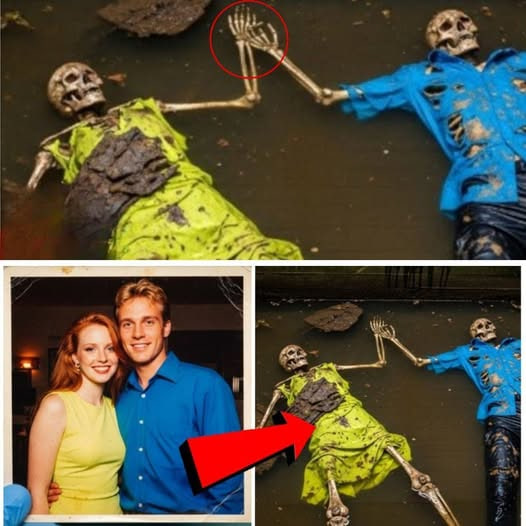
Harrison’s team began a painstaking investigation, piecing together the last moments of the couple’s freedom. They scoured surveillance footage and combed through the couple’s lives, looking for any clue, any hidden secret that could explain their disappearance. The initial theory of a planned escape was quickly dismissed. There were no unusual bank withdrawals, no searches for new homes or travel plans, and no suspicious conversations in their phone records. The couple’s life was a picture of perfect, quiet normalcy, which made their vanishing all the more unsettling. The last visual evidence of their vehicle was a single security camera from a gas station on a major avenue, which captured their Toyota Camry at 8:23 PM, confirming they were on the expected route.
A week into the investigation, a new lead emerged, a flicker of hope in the darkness. A mechanic named Samuel Miller reported seeing a black Toyota Camry being followed by a white Ford Focus on a dirt road leading to an isolated area. The sighting was unusual, as no one would typically drive down that remote road on a celebratory night. This new information shifted the focus of the search to the rural areas on the outskirts of the city, a desolate region with abandoned properties and thick vegetation. Despite an extensive search with dogs and drones, nothing was found.
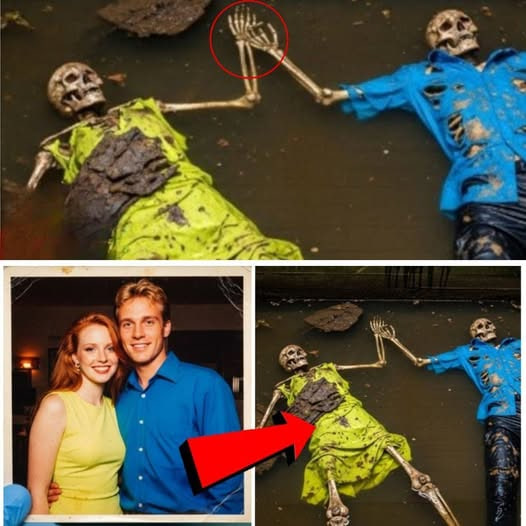
The case seemed to hit a dead end. National media, including popular true-crime shows, picked up the story, and a social media campaign ignited, mobilizing thousands. The pressure on the authorities was immense, but it also brought a flood of false leads. Sightings were reported in different cities, consuming valuable resources and time. The biggest obstacle remained the missing vehicle. Without the car, the police couldn’t establish what happened to the couple or where they might have gone. Searches of scrap yards, chop shops, and even ports yielded nothing.
Then, a breakthrough. In late January, detectives discovered that David had testified in an environmental crime case six months before his disappearance. As an engineer, he had reported an illegal construction project in a preservation area, which had resulted in a heavy fine for a local construction company. This revelation opened up a chilling new line of inquiry: had the disappearance been an act of revenge? The motive was now clear, but the perpetrators remained unknown.
As February wore on, the families’ frustration grew. Public protests were organized, with Mrs. Jones becoming a powerful, emotional voice for the victims’ families. Her impassioned pleas on local television for someone to come forward resonated deeply with the public.