There are journeys in life no parent ever wishes to take, yet sometimes life gives us no choice. When that moment comes, the only thing left is to walk forward with love, faith, and hope. This is the story of Amari, a five-month-old baby boy who has already faced more battles than most of us will ever encounter in a lifetime.
Amari was born into love. His parents and five older siblings had been waiting eagerly for his arrival, dreaming of the laughter and joy another little one would bring into their home. But from the very beginning, Amari’s life was marked by struggle.

Doctors discovered that he had congenital heart disease (HLHS Variant – Hypoplastic Left Heart Syndrome), along with a floppy airway and multiple chromosome deletions (12q13.3q14.1). These weren’t just small medical issues—they were life-threatening challenges that would require round-the-clock care and multiple major surgeries.
When Amari was only two weeks old, he was admitted to the Cardiac Intensive Care Unit. On November 1, 2023, his family received the devastating confirmation: their baby had congenital heart disease. Just one week later, on November 8, Amari underwent his first open-heart surgery.

The thought of such a tiny infant lying on an operating table, his chest opened to give his fragile heart a chance to keep beating, was almost too much for his parents to bear. Yet Amari, against all odds, survived that first surgery.
But the battle didn’t end there. On January 5, 2024, Amari faced his second open-heart surgery—known as the Norwood procedure. This operation is the first of three surgeries designed to restructure the heart so that it can function as a single ventricle. For most babies with HLHS, this is a critical step toward survival. The doctors made it clear: one day, Amari will almost certainly need a heart transplant to continue living.

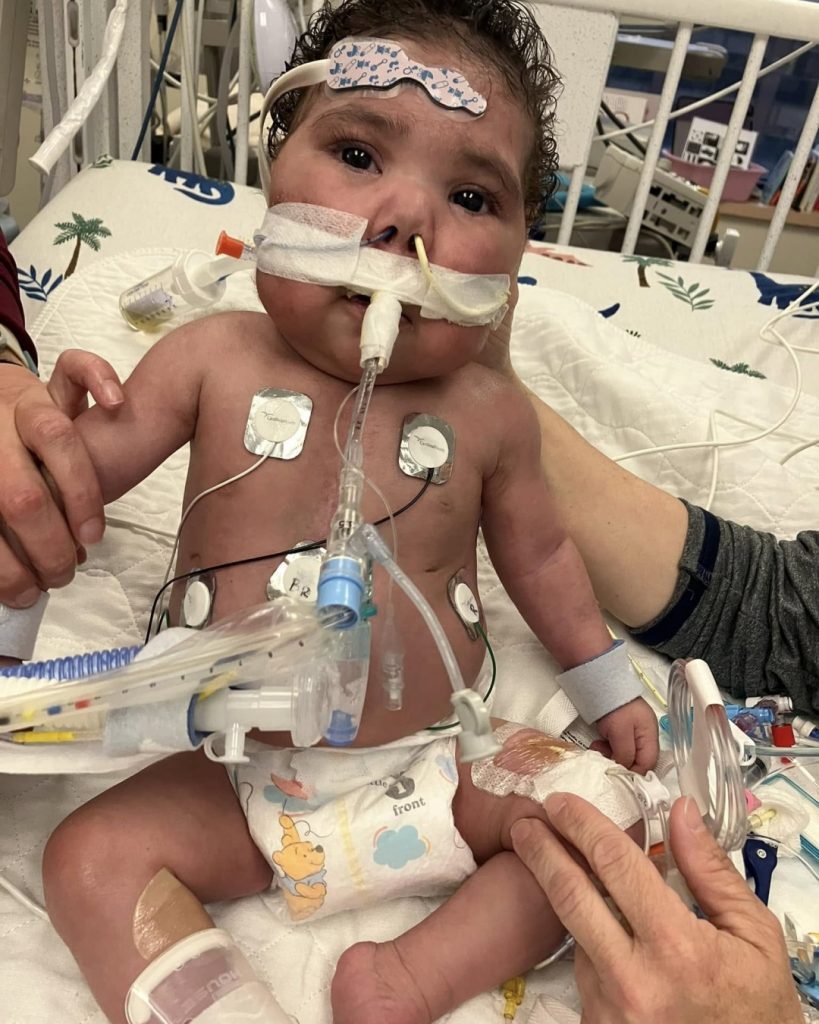
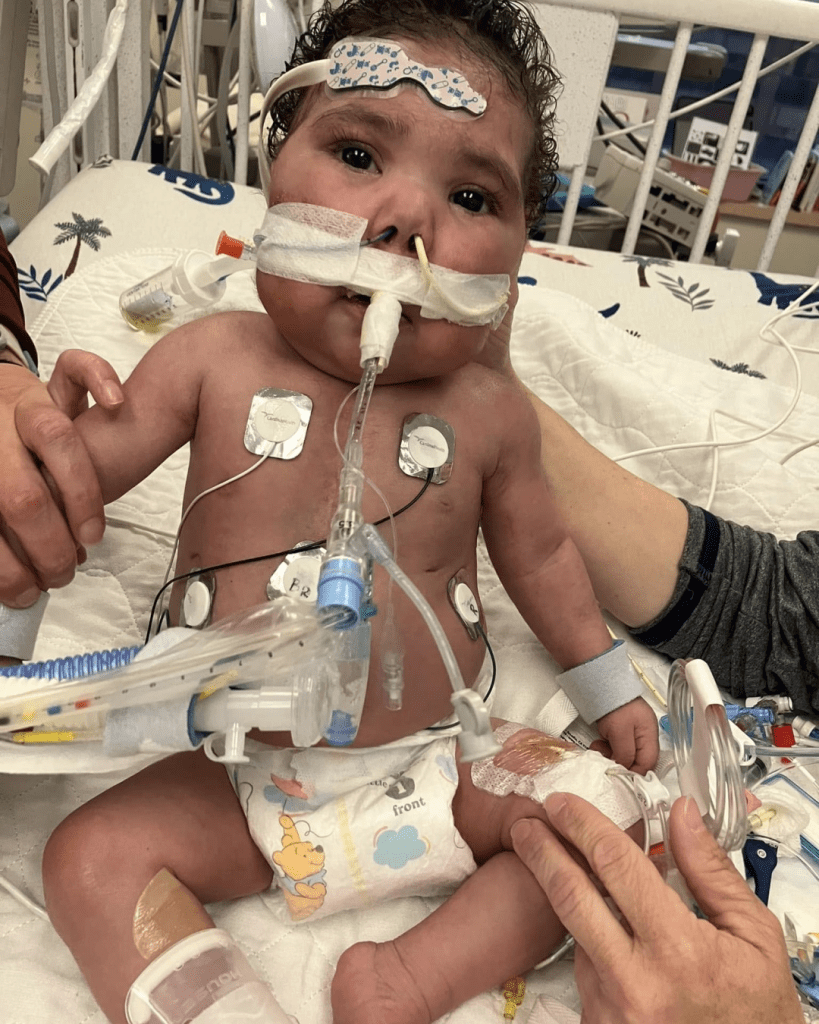
Since his birth, Amari has spent more time with breathing tubes than without them. He has been intubated for nearly his entire life, with only seven short weeks free of the ventilator. The most recent time he was able to breathe without the tube, it lasted only three days before his fragile airway collapsed again.
After multiple failed attempts at removing the breathing tube, the doctors delivered another difficult decision: Amari would need a tracheostomy.

In the coming weeks, surgeons will create a permanent opening in Amari’s neck to help him breathe. For his parents, this is both heartbreaking and hopeful. It is another surgery, another scar, another reminder of how fragile his body is. Yet it also brings the possibility of stability—of finally giving Amari the chance to breathe more comfortably and grow stronger.
Amari’s daily life is shaped not only by machines and surgeries, but also by the delicate balance of medications that keep him comfortable. For months, he had been given morphine to ease his pain, but over time his little body grew so accustomed to it that it no longer helped.

Recently, the doctors switched him to fentanyl, and for the first time in a long time, Amari seemed at peace. He became more relaxed, even happy—his little face lighting up again with the innocence of a baby who simply wants to be loved.
But even as Amari finds moments of comfort, his family struggles with the weight of separation. Amari is the youngest of six children, and his siblings miss him terribly. They want nothing more than to see their baby brother, to hug him, to make him giggle the way older siblings do.
Unfortunately, because of Amari’s weakened immune system, they cannot visit the hospital as often as they wish. The risk of infection is simply too high. And with the hospital being so far from home, every visit becomes a challenge. The distance is measured not only in miles but also in longing—the ache of siblings who just want their family to be whole again.
For Amari’s parents, every day is a mixture of fear and hope. They watch monitors blink and machines hum, knowing their baby’s life depends on every number and sound. They cling to the moments when Amari smiles or relaxes, seeing those as glimpses of the boy they long to bring home.

They pray for the tracheostomy to go smoothly, for Amari’s heart to stay strong, and for the day when they can finally carry him out of the hospital and back into the arms of his family.
What makes Amari’s story so extraordinary is not just the medical journey, but the resilience of a child so young and the fierce love surrounding him. His parents have learned to celebrate small victories: a good night’s rest, a stable heart rate, a comfortable smile. These moments may seem ordinary to some, but to them, they are miracles.